CCMA vs RMA (AMT)
The CCMA focuses heavily on clinical patient care, while the RMA tests a balanced mix of clinical and administrative skills. Choose the CCMA if you want a hands-on clinical role, and pick the RMA if you prefer a broad mix of front-office and back-office duties.
2,300+
questions in the app
10+ yrs
exam-prep publishing
Free
on iOS & Android
Built to help you pass faster — by exam-prep publishers with 10+ years' experience
- 💡 Key Takeaways — the one transferable rule per question
- 🔍 Hint highlights — the decisive cue phrases in each stem
- 📖 Full rationales — why every option is right or wrong
Every CCMA question is written to the current exam outline for quick learning and a clear pass strategy.
Written and reviewed by the LexPort exam-prep team, led by our Founder & Exam-Prep Lead. LexPort builds certification practice questions — this is exam-preparation material, not medical advice. Last reviewed June 2026.
Get the full CCMA question bank — free
2,300+ practice questions with rationales on iOS & Android
📄 Free: 15 high-yield CCMA questions + cheat sheet (PDF)
Enter your email and we'll send the printable PDF — rationales and key takeaways included.
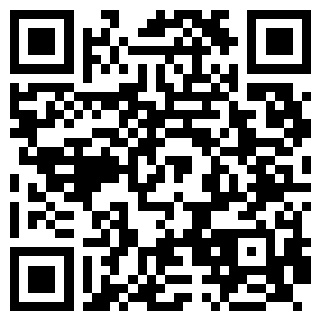
Studying on a laptop? Scan to put CCMA practice on your phone
Point your phone camera at the code — it opens the app straight from the store.
Get it on
App Store →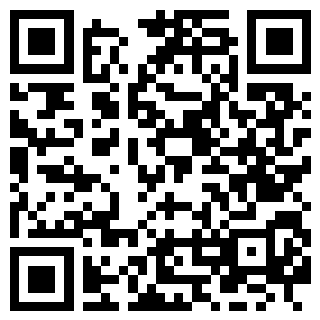
Get it on
Google Play →Overview and Certifying Bodies
The National Healthcareer Association (NHA) issues the Certified Clinical Medical Assistant (CCMA) credential. American Medical Technologists (AMT) issues the Registered Medical Assistant (RMA) credential. Both certifications prove you have the skills to work safely and effectively as a medical assistant. Employers across the United States recognize both credentials. Your choice depends on your training background, local job market, and daily career goals.
Eligibility Requirements
You must meet specific criteria to sit for either exam. For the CCMA, you need to complete a medical assistant training program or have qualifying work experience. You can find the exact experience timelines in the NHA handbook. The RMA also requires formal training or experience. AMT accepts graduation from an approved medical assisting program, military training, or documented work experience. For specific hour requirements and approved program lists, check the official RMA (AMT) handbook.
Exam Format and Content
The CCMA exam gives you 180 minutes to answer 180 questions. Only 150 of these questions count toward your score. You need a scaled score of 390 out of 500 (about 78%) to pass. The CCMA heavily emphasizes hands-on skills. The Clinical Patient Care domain makes up about 56% of the scored questions. Other domains include Anatomy and Physiology, Administrative Assisting, and Medical Law and Ethics. The RMA exam covers similar medical assisting topics but distributes them differently. The RMA tests a more even split between clinical tasks and administrative duties. For the exact RMA question count, time limit, and passing score, check the official RMA (AMT) handbook.
Career Focus and Scope
Both credentials qualify you to work in clinics, physician offices, and outpatient facilities. The CCMA focuses strongly on the clinical side of the job. It prepares you for tasks like drawing blood, taking vitals, performing EKGs, and assisting with minor procedures. The RMA maintains a balanced focus. It covers clinical skills but places equal weight on front-office duties. If you plan to manage medical records, handle billing, or schedule patients alongside your clinical duties, the RMA aligns well with that broad scope.
How to Decide
Start by checking your training program. Many schools partner directly with either the NHA or AMT. Taking the exam your school sponsors is usually the easiest path. Next, look at local job postings. Some regional employers prefer the RMA, while others ask specifically for the CCMA. If you have no program affiliation and employers accept both, choose the CCMA if you prefer direct patient care. Choose the RMA if you want a balanced clinical and administrative role. You can prepare for the CCMA using our 2300+ practice questions.
FAQ
- Is CCMA better than RMA (AMT)?
- Neither is objectively better. Both are nationally recognized. The CCMA is highly clinical, while the RMA offers a balanced mix of clinical and administrative focus. Employers value both credentials.
- Which exam is harder?
- Difficulty depends on your personal strengths. If you excel at clinical procedures and patient care, you might find the CCMA easier. If you are strong in front-office management, insurance, and billing, the RMA might feel more straightforward.
- Can I hold both the CCMA and RMA?
- Yes, you can hold both certifications if you meet the eligibility requirements and pay the fees for both. However, most employers only require one. Holding both rarely increases your salary.
- How do I prepare for the CCMA exam?
- Review the NHA official handbook to understand the seven exam domains. Focus heavily on the Clinical Patient Care section, as it makes up roughly 56% of your score. Test your knowledge using our 2300+ practice questions to identify your weak areas.
- Is the CCMA easier than the RMA?
- Neither is officially 'easier.' The CCMA (NHA) and RMA (AMT) are both entry-level medical assistant certifications that test similar clinical and administrative skills. Difficulty comes down to your training and which exam's blueprint your program follows. To gauge the difficulty for yourself, start with our free practice questions aligned to the exact exam you're taking.
- CCMA vs RMA: Which is better?
- Pick the credential your employer, state, or training program recognizes — both are widely accepted. The CCMA is issued by the NHA; the RMA by American Medical Technologists (AMT). A quick check of medical-assistant job postings in your area usually shows which one local employers ask for.
- Is AMT the same as CCMA?
- No. AMT (American Medical Technologists) is the organization that issues the RMA credential — it isn't the CCMA. The CCMA is issued by a different body, the NHA (National Healthcareer Association). So when you see 'AMT,' it refers to the RMA's issuer, not the CCMA.
See what CCMA actually tests
Three realistic practice questions tell you more about the exam than any comparison table. The app has 2,300+, timed and scored.
Question 1
A clinic manager is introducing a new chemical sterilant for surgical instruments. The medical assistant needs to determine the required personal protective equipment before opening the container. Which section should they review?
▸ Why D is the answer
Section 8 details exposure controls and personal protection, making it the exact location to find required PPE like specific gloves or goggles. Section 2 will warn you about the chemical's dangers using pictograms and signal words but won't list the specific protective gear required. Section 4 is reactive, offering help only after an exposure happens. Section 7 tells you how to store the product safely on a shelf, not how to protect your body while actively using it.
🔑 Key takeaway
Section 8 of the SDS details exposure limits and required personal protective equipment (PPE).
Question 2
A 78-year-old patient with moderate dementia is unable to state a number for her joint pain.
▸ Why A is the answer
When cognitive decline prevents a patient from understanding the numeric rating scale, the FACES scale provides a simpler visual alternative that often bridges the comprehension gap. Option A is correct because it adapts the assessment to her cognitive ability. Option B is incorrect because pain is subjective, and caregivers shouldn't rate it if the patient can still use a visual tool. Option C is premature without first trying an alternative visual scale. Option D is incorrect because it still relies on numerical concepts which she cannot process.
🔑 Key takeaway
Visual pain scales should be utilized when cognitive decline prevents a patient from using numeric scales.
Question 3
A patient account has a past due balance of 120 days and the patient recently declared Chapter 7 bankruptcy. The medical assistant is reviewing the ledger.
▸ Why D is the answer
When a patient formally declares Chapter 7 bankruptcy, all collection efforts must immediately cease by law. The medical assistant cannot attempt to collect on the past due balance of 120 days. Option D is correct because the outstanding balance must be written off as bad debt, acknowledging that the clinic will not recover the funds. Option A is incorrect because continuing to send monthly statements violates the automatic stay enacted during bankruptcy proceedings, which prohibits creditor contact. Option B is incorrect because a sliding fee scale is a proactive measure for patients seeking affordable care, not a retroactive solution for a bankrupt account. Option C is incorrect because forwarding the account to a collection agency is also illegal once bankruptcy is filed; the agency would be equally prohibited from pursuing the discharged debt.
🔑 Key takeaway
When a patient declares bankruptcy, all collection efforts must cease and the balance is written off.
Unlock all 2,325 CCMA practice questions, including 15 full-length mock exams
Timed, scored, with progress tracking and every answer explained. Free to start.
Practice the full CCMA bank in the app
You've seen a sample. Get the complete experience — a timed exam simulator, every rationale, and progress tracking that shows exactly what to study next.
This page shows a few free samples. The app has all 2,300+ CCMA questions, a timed mock exam, and offline study.
- ✓ 2,300+ real CCMA questions
- ✓ Timed exam simulator — real conditions
- ✓ Every answer explained + key takeaway
- ✓ Tracks your weak topics
- ✓ Works offline · Free to start
Get the full CCMA question bank — free
2,300+ practice questions with rationales on iOS & Android

Sample exam question…